


Alpaca walks in Devon
Alpacas are not based on-site permanently and are only available on pre-arranged dates.
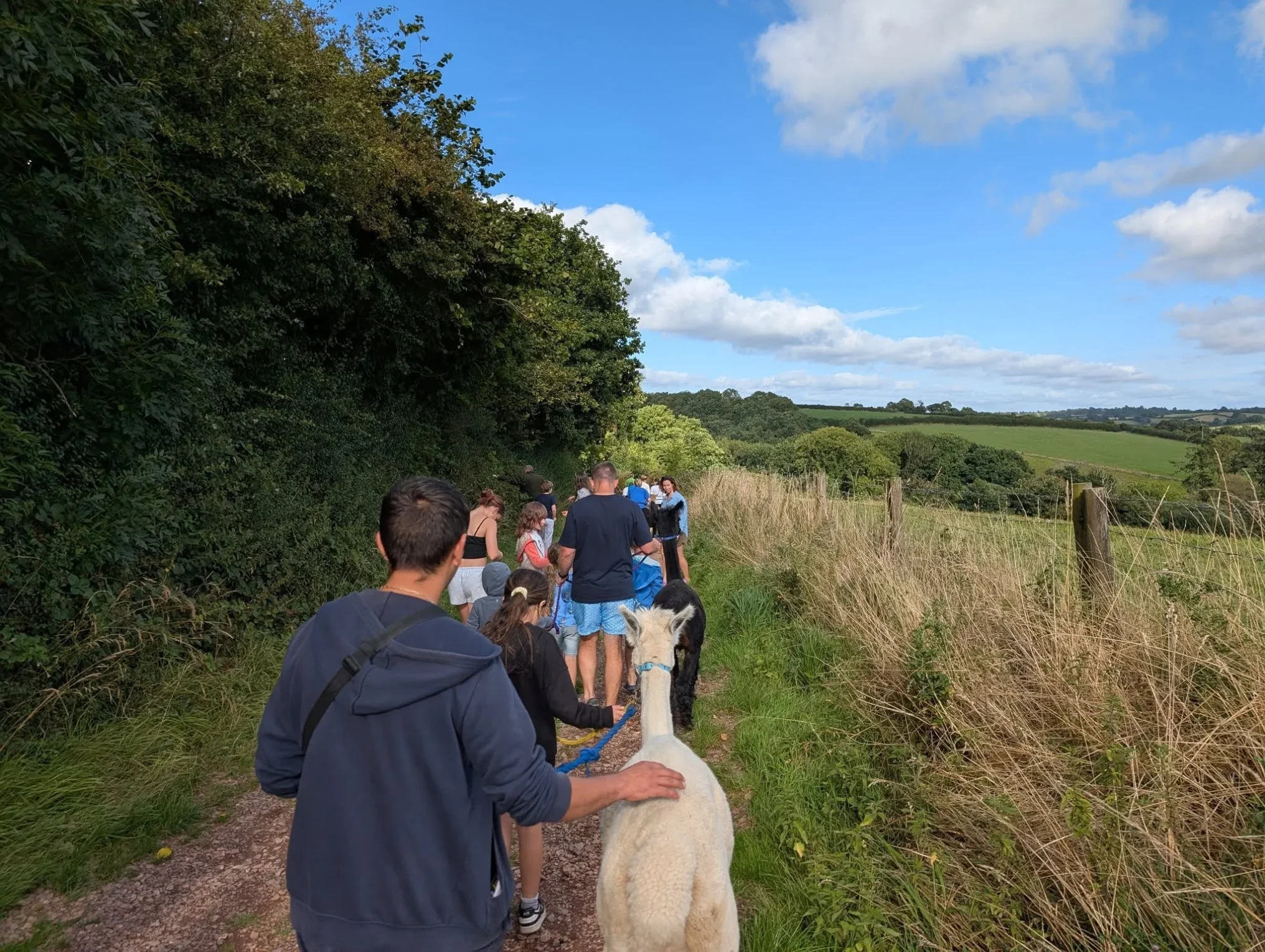
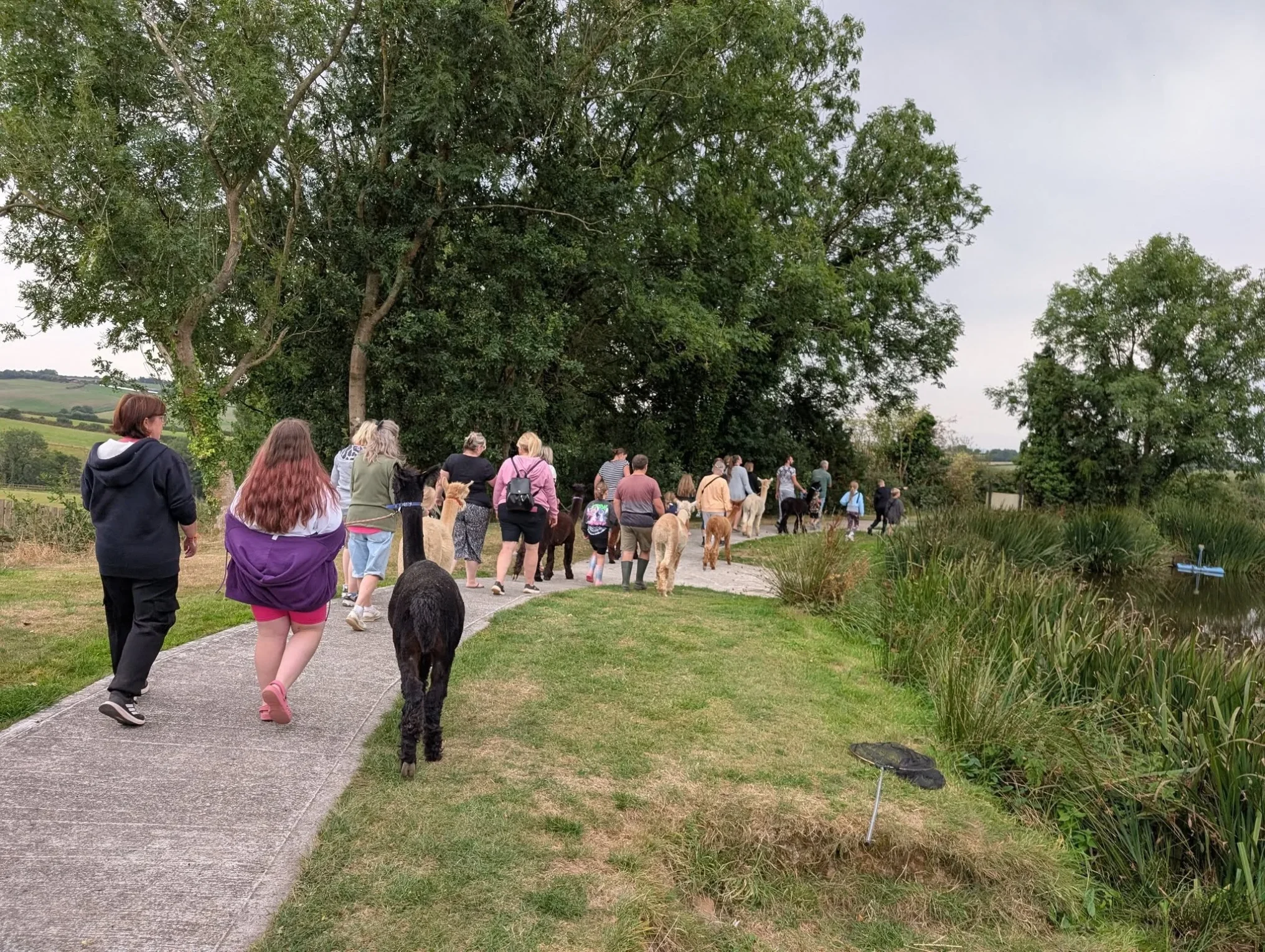
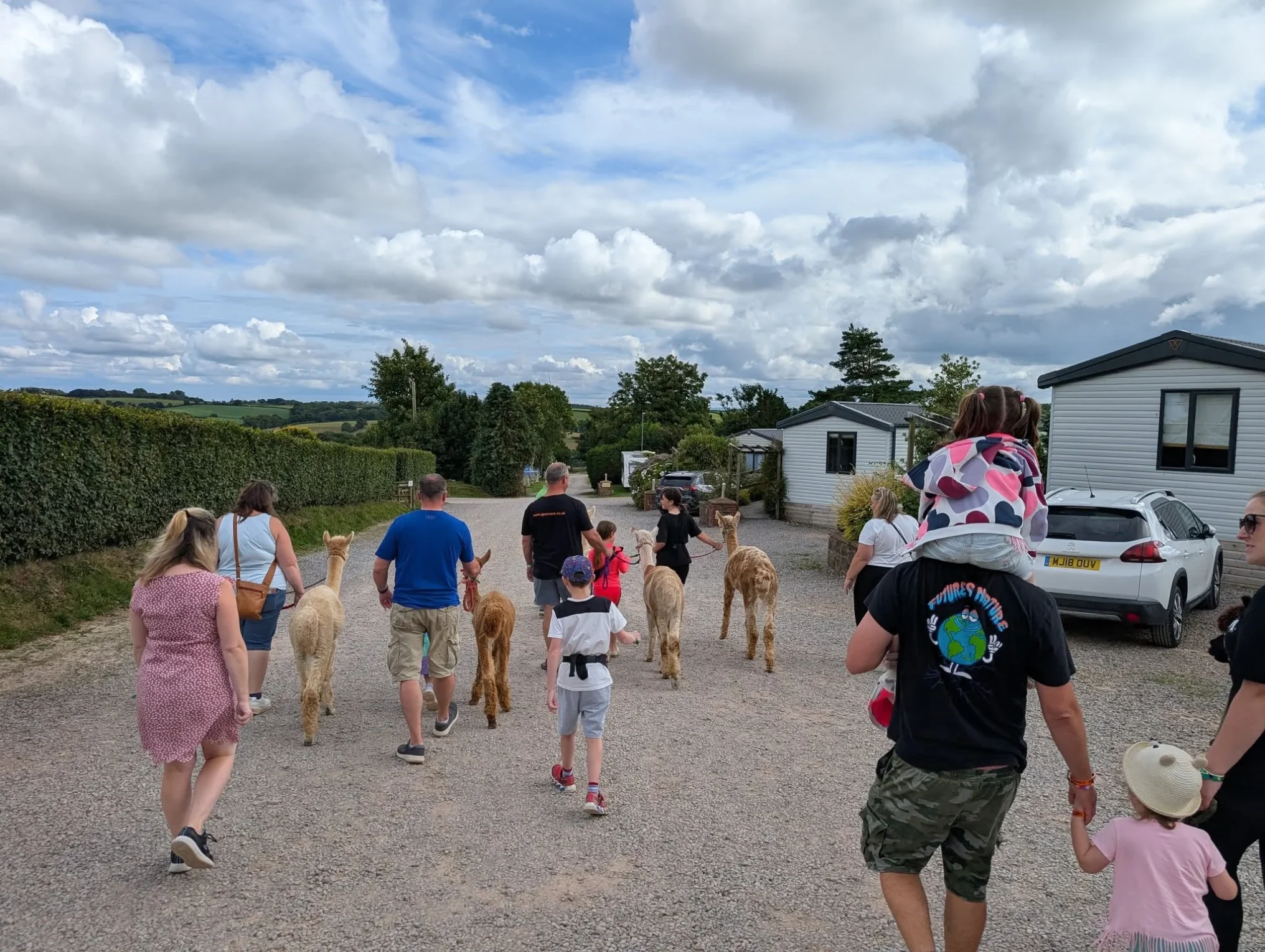
Alpaca walks are available to book at reception (or via email) for guests staying on site. As availability is limited, we recommend booking early to avoid disappointment.
Each alpaca walk costs £16 and lasts approximately 45 minutes. An alpaca can be shared between up to four people, making it a great activity for families.
Children under 16 must be accompanied by and adult and children under 10 will need an adult to help co lead the alpaca during the walk.
Who can book alpaca walks?
Alpaca walks are available exclusively to guests staying at Yeatheridge Holiday Park. Unfortunately, we’re unable to offer bookings to non-residents.
Fun Facts about Alpacas
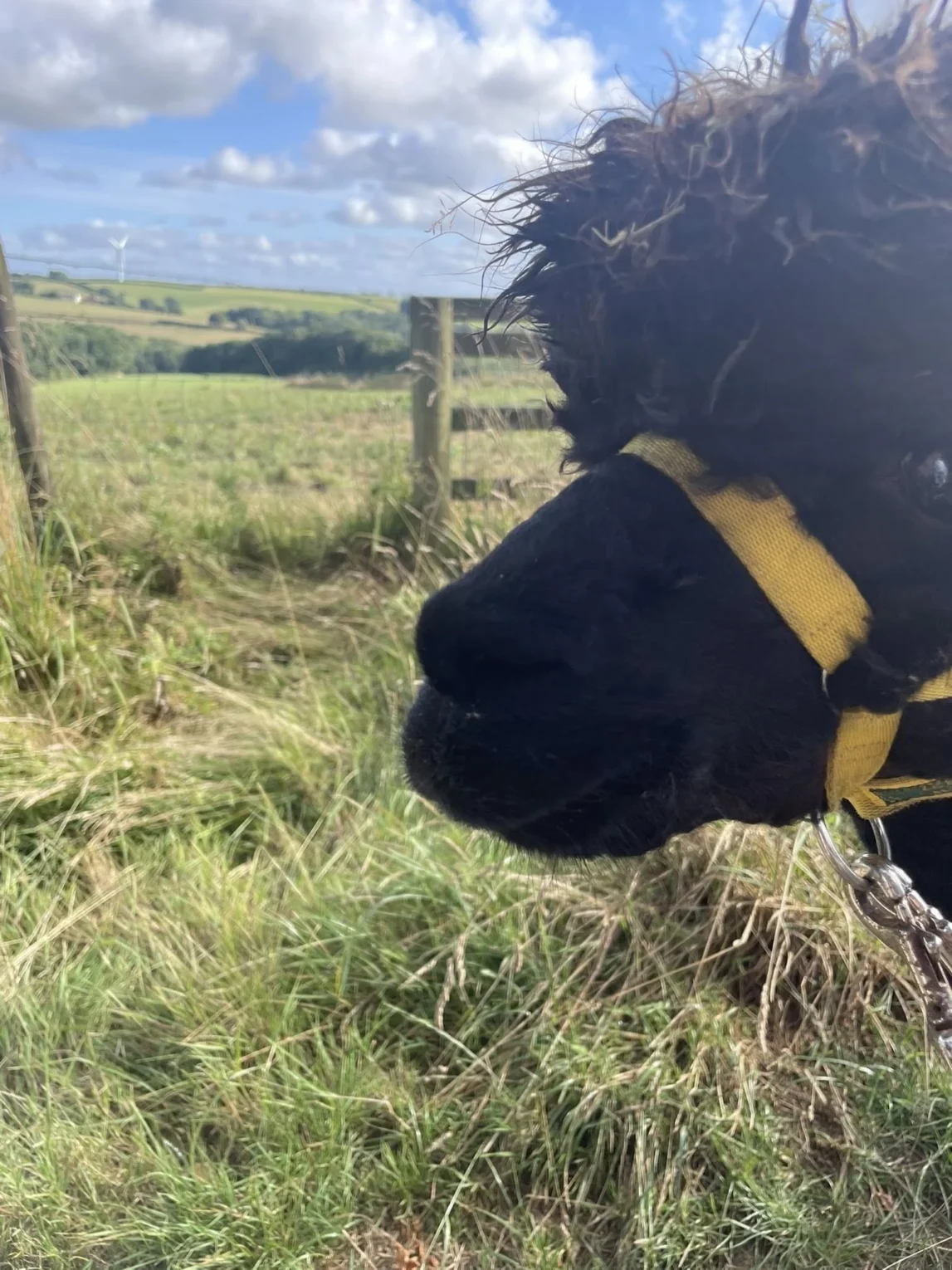
We think our alpacas are gorgeous – would you agree? With their fluffy coats, slender necks and expressive faces, they’re often considered the cutest members of the camelid family (which also includes llamas, guanacos, vicunas and camels).
Alpacas are ancient
Alpacas were domesticated over 6,000 years ago by the Inca’s, who prized them for their incredibly soft fleece. Their fibre was once reserved for nobility due to it’s quality and versatility. Today, alpaca wool is known for being warm, water resistant and naturally flame-resistant.
They can be fussy eaters
Alpacas have a split upper lip, which helps them carefully select the tastiest plants while avoiding anything they don’t like.
They communicate by humming
Humming is the most common sound alpacas make. It can mean their content, curious, worried or alter. When startled, they may make a sharper alarm call to warn others.
Baby alpacas are called ‘crias’
Newborn alpacas typically weigh between 10-17 pounds and are weaned after around six to eight months. Mother’s bond with their young through gentle humming and close contact.
Yes…alpacas can spit!
Its true, but they only spit when annoyed or threatened. If their ears are back and their head is raised, it’s best to give them a little space!
They’re very clean animals
Alpacas are known for their good hygiene and tend to use a shared ‘bathroom area’, which helps keep their environment tidy.
FAQs
Are the alpaca walks suitable for children?
Yes, an alpaca walk is great fun for all ages. Children under the age of 16 must be accompanied by an adult.
Are the alpacas based at Yeatheridge Farm?
No, the alpacas do not live at Yeatheridge Farm.
Can more than one person share an alpaca?
Yes, an alpaca can be shared by up to 4 people.
Can non-residents book an alpaca walk?
No, our alpaca walks are exclusively for guests staying at Yeatheridge Farm Caravan Park.
Do I need to book an alpaca walk in advance?
Yes, you need to book your alpaca walk in advance. You can book a slot at reception or via email.
How do I book an alpaca walk?
Book your alpaca walk at reception or via email. We recommend booking early because slots tend to sell out fast.
How long does an alpaca walk last?
Each walk lasts approximately 45 minutes.
How much does an alpaca walk cost?
Each alpaca walk costs £16 and it lasts approximately 45 minutes.
When are alpaca walks available?
Guided alpaca walks are available on select dates throughout the summer months.